
Helpful Articles - Caregivers

Choosing to give power of attorney (POA) to someone else is a very personal choice. It is certainly something that every family should consider and think about carefully.

A few states have "Death with Dignity” laws on the books. As of 2019, physician-assisted dying (PAD) is allowed in Colorado, the District of Columbia, Hawaii, Maine, New Jersey, Oregon, Vermont, and Washington. It has also been mandated by a court ruling in Montana and California. Individuals must have a terminal illness and prognosis of less than 6 months to live. In states where PAD is legal, terminally ill adult state residents can voluntarily request and receive a prescription medication so they can die in a peaceful, humane manner in a place and time of their choosing. A person must be a legal state resident to qualify for this assistance. A person cannot simply go to one of these states and request physician-assisted dying. A person does NOT have to be in Hospice care, or in any other kind of care institution like a hospital or nursing home, to exercise their right to seek physician-assisted dying. Not all physicians, even in states where it is allowed, are willing to empower a person to make this choice. However, in these states there are organizations that will help a person who qualifies under the law to find a compassionate physician to help them carry out their wishes. Hospice provides a range of end-of-life care options, so even in those states that allow physician-assisted dying, Hospice patients have a range of choices. Hospice caregivers from the physician-assisted dying states report that it is not unusual for a patient to change their mind about exercising this right either before or after entering Hospice care. Even patients with a terminal illness who have given up on life sometimes find a reason to want to continue to live as long as possible. In those states that allow "Death with Dignity”, this choice can be made legally and with assistance, and without any legal consequences for those who participate. Nothing in life is more of a personal choice than the decision to live every day that is given to us. Or to decide that the time has come for one’s life to end.

There are two kinds of major, potentially life-threatening strokes. In an Ischemic stroke, a blood clot forms that reduces or blocks blood flow to the brain. In a hemorrhagic stroke, a blood vessel in the brain begins to leak or bursts suddenly. With both types of stroke events, the short and long-term outcome depends largely on how quickly and how well the stroke is treated. What happens after a stroke? Unfortunately, many people who experience a stroke do not get treatment in time and face long-term consequences as a result. After a stroke, it can take a few weeks or months to determine whether recovery is possible, or whether the stoke victim is going to experience an irreversible decline. Typically, following a stoke, the first weeks or months are spent in a hospital. There, the stroke victim can receive treatment aimed at helping them to recover and go on to lead a life of reasonable quality. This is the goal of hospitalization. If the stroke victim makes progress toward recovery in the hospital, the family and the doctors may make the decision to move the patient to a skilled nursing or rehabilitation facility. From there, it is hoped that the patient will recover enough that they can go home. Some stroke victims do manage to recover enough to go home. Others recover somewhat but still need a higher level of care than can be provided at home. In this case, they typically enter a nursing facility. But it may also turn out that, despite all medical efforts, there is nothing that can be done to reverse the effects of the stroke. Unfortunately, sometimes a stroke victim makes little no progress toward recovery in the hospital setting and continues to decline. In this case, the doctors and the family may begin to discuss hospice care. What are the requirements for Hospice care for stroke victims? To be eligible for Hospice care under Medicare guidelines, a physician must certify that the consequences of the stroke are likely to lead to death within six months. They must also certify that medical treatments no longer have a chance of leading to any level of recovery. Whether or not a stroke victim is eligible for Hospice care is a decision that can only be made by the physician. Some instances where a physician may determine that a patient is a candidate for Hospice care are if a stroke patient: is unconscious all or most of the time cannot eat or take fluids cannot perform any voluntary physical acts such as lifting an arm, talking, or walking cannot recognize people cannot understand simple directions cannot control bladder or bowel functions. If doctors see no progress in any of these areas or see a steady decline, then they may conclude that the person is going to die within six months despite any medical treatment. At that point, since there is nothing more a hospital can do to help with recovery, the goals of medicine change. They go from treatment leading to recovery to treatment making the person’s inevitable death as comfortable, pain-free, and caring as possible. This is what hospice care is dedicated to 100%. What happens once it is determined that Hospice care is necessary? Hospice care can be given in a wide range of places. It may be in a nursing home, in a hospice inpatient facility, at home with the family, or in some cases in a special hospital ward dedicated to hospice. The decision on where the person can receive the best hospice care is made with the involvement of the doctors, the Hospice staff, the family, and perhaps other specialists such as a social worker and in some cases a spiritual counselor. The Hospice placement decision is not made lightly. It always made with the goal of providing the best care for the dying person. Once a placement has been determined, the team that will work within the selected hospice setting, in whatever location is deemed best for the patient. The team will work together to ensure that the patient receives the best possible support and care. It can be very difficult for families to accept that there are no longer any treatment options available for their loved one. However, once it has been determined that switching to Hospice care is best, the family will no longer have to spend a lot of time dealing with insurance issues or making major medical decisions. Hospice care frees family members up to spend most of their time loving, supporting and caring for their family member.
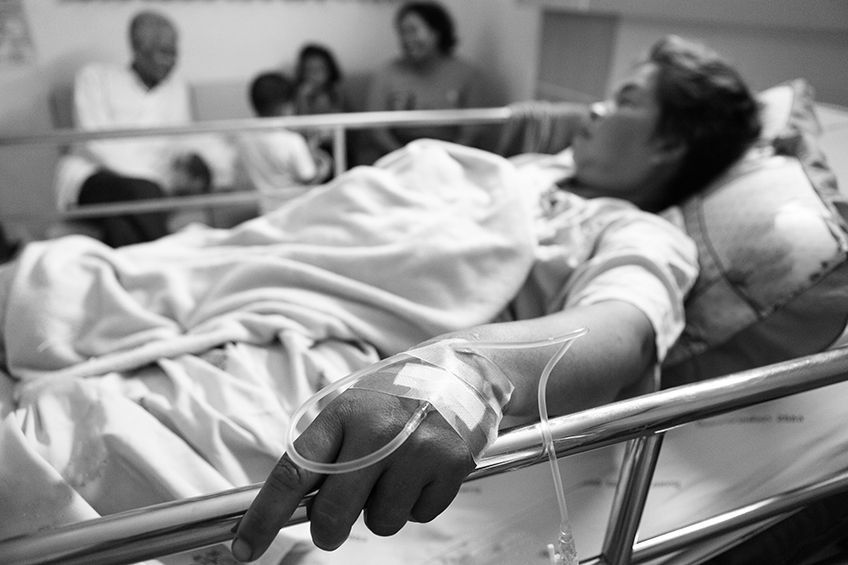
Typically, medicine is focused on extending the life of a patient. However, once a patient is in Hospice care, the treatment options can change. There are different treatments and interventions that can artificially extend someone’s life when they are near end of life. These are things such as medications, transfusions, radiation, feeding tubes and ventilation for breathing. During Hospice Care there are often points at which critical decisions must be made about whether to withhold or withdraw treatment for a patient facing a medical crisis. This means that health care works can stop treatment, but only at the request of a patient, their family, or a substitute decision maker. What medical support is given, or withheld, should be determined by the individual’s wishes. Ideally, those wishes will be expressed to family members and care givers before a major medical event arises. Learning about your options for end of life care will help you make the best decisions for you and your family. What does it mean to withhold or withdraw treatment? Some people want to be allowed to die "naturally”, without any attempt to help them recover from a crisis that occurs during the dying process. Discontinuing or declining medical care means that artificial treatment methods will stop. This does not mean that symptom control like pain management will stop, however. Medical professionals will do everything they can to allow a patient to feel comfortable. But they will also allow a patient to die naturally from a disease. Case 1: Withdrawing treatment: Fred wants to stop transfusions Fred has been receiving transfusions for leukemia. Now, the cancer has spread, and he cannot live without regular transfusions. He continues to get infections that must be treated with antibiotics. However, these are not working well anymore either. He has no energy and sleeps most of the day. Fred lets his healthcare team know that he is not happy and that he wishes to withdraw treatment. Fred decides to stop the transfusions. The next time he gets an infection, he decides to decline antibiotics since they no longer help. Fred’s medical team treats his pain symptoms, but they allow nature to take its course. Case 2: Withholding treatment: Suzanne’s family declines life-prolonging treatments While in Hospice care for Alzheimer’s, Suzanne suffers a major heart attack. Suzanne has let her family know that in the event of a major medical crisis, she does not want to have artificial life support put in place. Her family calls EMS and they take Suzanne to the hospital. In the hospital, they discover that Suzanne has suffered a heart attack. The only way that she will have any chance of survival is to be placed on a breathing machine. Suzanne’s family knows this goes against her wishes, so they decline to the treatment. The health care team instead focuses on treating any pain or other symptoms and allow her pass away naturally. While it can be difficult to think about, it is important to decide when medical treatment will be withdrawn or withheld for a hospice patient. The dying person’s wishes should guide every person and health care provider in determining how to how to best treat the patient in any situation.

Aggressive medical care refers to the idea that more health care is better – more tests, more procedures, more specialists. For hospice patients this includes the use of artificial interventions to extend someone’s life when they are near death. Individuals who have completed advance directives (AD) should have addressed the use of aggressive medical care. This means they have determined which measures they do or do not want taken to keep them alive. If the AD does not address these circumstances, then it is important to contact an attorney to make sure the document is as comprehensive as possible. The key is to consider all possible events and outcomes that a person with advanced illness may go through. From there, the next step is to decide what they want to happen in each instance. It is important to document these wishes legally in an AD so all decisions made reflect the patient’s wishes. Be aware that in some states or counties, EMS personnel may be required by law to attempt to resuscitate even if the person has an AD in place and they are shown that document. If the patient has an AD or "Do Not Resuscitate” (DNR) order in place, family members should ask their attorney for advice on whether to call EMS under such circumstances. If the person is in a Hospital or Nursing Home, they will probably have their own policies. What things should be addressed in an Advance Directive? It is important to understand the drawbacks and limitations of different types of aggressive medical treatments in order to know which ones, if any, are right for a patient. Here are some instances that need to be addressed in an advance directive: Respirator : If a person in advanced stages of dying is no longer able to breathe independently, a respirator may be used to assist with breathing. While a respirator can help keep a person alive, it may also cause the person’s body to undergo unnecessary stress and can cause greater discomfort. Feeding Tubes : Feeding tubes are sometimes used if a person has a hard time eating or swallowing. This is common in the late stage of many illnesses. However, there is no proof that tube feeding has significant benefits or extends life. Tube feeding can also result in infections and the need for physical restraint if a patient tries to pull the tube out. IV Hydration : This is liquid given to a person through a needle in a vein. It may temporarily provide fluid when a person can no longer drink but cannot supply the nutrition needed to stay alive. Increased hydration may also make the person uncomfortable because it can cause difficulty with breathing. It is important to know that Lack of hydration is a normal part of the dying process and allows a more comfortable death over a period of days. CPR : A family may have to decide whether medical professionals should try to revive a person with cardiopulmonary resuscitation (CPR). CPR is used to restore function when a person’s heart and/or breathing stops. It may include mouth-to-mouth breathing or pressing on the chest to mimic heart function and cause blood to circulate. CPR can be painful and traumatic and may not prolong life. It is typically not recommended when someone is terminally ill. Do Not Resuscitate : The family can ask the doctor to sign a do-not-resuscitate (DNR) order and place it in the person’s medical chart. A DNR order states that no attempts will be made to revive the person. A separate type of DNR order must be signed and kept in the home or available to EMS if the person wants no "out-of-hospital” resuscitation. Make sure to discuss these events with your loved ones and create and AD that works best for the patient’s wishes.

What Medical Equipment & Services Can Hospice Order For In-Home Care?

The short answer is yes. As long as a Veteran is enrolled in Medicare, along with any VA-related coverage they may have, they can receive hospice care at home. Veterans who have Medicare, even if it is only Part A, are eligible for Medicare-paid hospice care at home when they become terminally ill. A Veteran who is not enrolled in Medicare and uses only VA health care is limited to the use of VA outpatient and inpatient medical services, including hospice care. VA at-home hospice services may be severely limited in some places, whereas Medicare at-home hospice services are widely available, so there’s no reason for any eligible Veteran to not have at least Part A. Some VA hospital facilities have a hospice inpatient unit integrated into their services. Those that do not refer Veterans needing inpatient hospice care to community-based hospice providers, regardless of the Veteran’s Medicare status. If the VA facility does have an "in-house” hospice unit for inpatients a Veteran can still receive care from a community-based hospice provider if they have Medicare. They would simply need to ask for that option from their VA doctor. And if things get to the point where the veteran can no longer be cared for at home, they still have a choice. They are not automatically required to go into the VA in-patient hospice care unit if they have Medicare and think that better care if available in a community-based inpatient hospice facility. There are as many reasons why a Veteran who is an inpatient might choose to stay within the facility as there are reasons why an inpatient Veteran might decide that they prefer community-based hospice care. It is important to do your research and ask questions before making any decision about where you want to receive care. There are many issues that can affect a Veteran’s rights to health care under different circumstances, so it is a good idea for veterans and their families to begin asking direct questions about both hospice home-care and in-patient options before such care becomes a necessity.

In-home health care refers to a wide range of health care services that can be given in your home. These services can be provided for many types of illnesses or injuries. Many in-home health care costs are covered under Medicare. However, the costs and eligibility for medical equipment and services vary, depending on the reason for the in-home care. Medical Equipment If a Home Health Care patient needs medical equipment, it must be ordered by their doctor. If the equipment order is approved by Medicare, then Medicare will cover 80% of the cost. Unfortunately, not all orders will be approved by Medicare as they may not feel the equipment is necessary. If a Hospice patient needs medical equipment, it is much easier to order. Hospice nurses as well as doctors can order just about any kind of medical equipment. The equipment can be delivered to the patient’s home if the nurse or doctor certifies that it is needed for delivery of palliative care for the patient’s terminal condition. Best of all, the cost is covered 100%. Medicare rarely argues with these decisions. If they do, Hospice staff can typically get such issues resolved quickly. Personal Care Services Another important difference between regular in-home health care and hospice care is that Medicare will not pay for personal care services under Home Health Care. These include things such as assistance bathing, going to the toilet, brushing teeth, or nail care. However, a patient receiving Hospice care at home receives any personal care services they need that relates to palliative care for their terminal condition. Medicare covers the cost 100%. Palliative care is not limited to drugs that relieve pain – it covers whatever the Hospice nurse or doctor says is needed. Medicare almost never argues about whether such services are needed for hospice patients. Types of Equipment Covered by Medicare for Hospice Patients Equipment commonly needed by Hospice patients, ordered by Hospice staff, and paid for 100% by Medicare includes: Hospital beds with all necessary features A high-quality pressure-relief mattress Wheelchair and other specialty mobility devices Trapeze bar and patient lift Emergency communication devices Patient monitors Walker, four-footed cane, tub seat and bedside commode Nebulizers Oxygen and delivery devices CPAP and BiPAP High-flow therapy Suction equipment Feeding pump Using VA Grants Wisely Sometimes in-home health patients need alterations made to their home to help accommodate a disability. This is one thing that Hospice care does not typically cover. However, a Veteran with a service-connected disability may be eligible for one of three types of grants from the VA. These grants can be used for modifications to their home, or to the home of a family member who is caring for them. It is a good idea to investigate getting the appropriate VA grant BEFORE a Veteran becomes eligible for Hospice care if there is a chance that Hospice care will be needed in the future. Having the home specially fitted for disability mobility can make life easier for a Veteran and their caregivers long before a terminal illness requiring hospice care develops - if it ever does. Once a patient does require in-home Hospice care, these types of accommodations will be very helpful. The three programs, each with its own requirements and benefits, are: Specially Adapted Housing (SAH) grants Special Home Adaptation (SHA) grants Home Improvement and Structural Alteration (HISA) grants In-Home Hospice care can be greatly facilitated if alterations to the veteran’s home are made prior to their need for Hospice care, which does not pay for such alterations.

The short answer is yes. Medicare will only cover up to six months of Hospice care for a person whose physician certifies that they are terminally ill. It is possible that hospice patient’s condition improves, and their doctor no longer believes that they will die within the covered 6-month period. In this case, they may be removed from Hospice care. At this point, all their original Medicare coverage will be restored. A Veteran with Tricare For Life will not lose this insurance upon entering Hospice care, so no restoration of benefits would be needed. As an example, let’s say that Mrs. Vasquez, the wife of a deceased Veteran, is diagnosed by her doctor with advanced ovarian cancer that the doctor believes will result in Mrs. Vasquez’s death within a few months. The doctor also believes that nothing can be done medically to change that outcome. In that case the doctor would certify Mrs. Vasquez to be eligible for Hospice care, which would begin immediately. The six-month Medicare coverage for Hospice is divided into two 90-day periods. After the end of the first 90 days the doctor must re-certify Mrs. Vasquez. However, even though all chemo and radiation therapies stopped when Mrs. Vasquez entered Hospice, for some reason in the fourth month of her Hospice care the tumor shrinks. Mrs. Vasquez’s pain begins to diminish. By the fifth month, even though Mrs. Vasquez has not been receiving any treatment for her cancer while in Hospice, her doctor and various other specialists are happy to report that the tumor, while not completely gone, appears to be in almost full remission. Mrs. Vazquez and her family are overjoyed, as are all the Hospice staff. However, Mrs. Vasquez’s medical condition is no longer terminal. Under Medicare guidelines Hospice care must be withdrawn. While it is wonderful news that Mrs. Vasquez is no longer considered to have a terminal illness, withdrawal of Hospice care will mean that some changes must be made in how her family takes care of her. While these changes may be disruptive, there is much to be grateful for. Now, Mrs. Vasquez will automatically return to coverage under the Medicare Parts A, B and D that she previously had. Her Tricare For Life benefits will have remained intact during Hospice care. This means that she will again be paying for Parts B & D. Also, since Mrs. Vasquez was receiving in-home Hospice care, some of the medical equipment that was covered under Hospice is not covered under regular Medicare. It must be taken away. The pain-killing drugs that she was receiving for her terminal pain are also no longer covered by Hospice. However, they may still be covered (with her co-pay) under her Medicare Part D as well as under TriCare For Life. There may be other circumstances that affect the type and amount of care that Mrs. Vasquez could receive in addition to Medicare. For example, she may have a Medicare Advantage plan or Medicare supplemental insurance. Since she is the covered spouse of a Veteran and has "Tricare For Life” benefits, these benefits will also reduce her out-of-pocket costs for ongoing medical care. If Mrs. Vasquez’s cancer returns, or if she develops another condition that her physician determines is terminal, she will once again become eligible for the full six-months of Hospice benefits.

Being in hospice care sounds very similar to being in the hospital to most people. If you have not had a personal experience with hospice care, or know someone who has, you may not be aware of the difference.

Eight Important Differences Between Hospice Care and Palliative Care

There are four parts to Medicare. Part A provides inpatient and hospital coverage. Part B provides outpatient and medical coverage. Part C offers an alternative way to receive your Medicare benefits. This is a type pf health plan offered by a private company that contracts with Medicare. Part D provides prescription drug coverage. Even though it may seem counterintuitive, since hospice care is typically delivered out of a hospital, Hospice care is fully covered under Medicare Part A. You automatically receive starting Medicare Part A at age 65. So, you do NOT need Medicare Part B to receive Hospice care. With Medicare Part A, there are no costs for hospice care at home or in a hospice in-patient facility. However, if you are receiving hospice care and ONLY have Medicare Part A, you are not covered for any illness or condition that is not directly related to the terminal condition. Why you may want to consider enrolling in Medicare Part B. Let’s say you are over 65 and diagnosed with terminal cancer that limits your life expectancy to six months or less. You will receive hospice benefits under Part A. However, let’s say that you also have Diabetes. This is a serious but not terminal disease. In this case, since you are in hospice care, the Diabetes will be treated. However, it will likely be with fewer benefits than you could receive under Part B, as the diabetes is not related to your terminal condition. If you want to make sure that you are going to receive coverage for Diabetes treatment, then you would want to make sure to have Medicare Part B coverage. This brings up a critical issue for Veterans. When your Tricare coverage ends at age 65, you become eligible for "Tricare For Life”, but ONLY if you are enrolled in both Medicare Parts A & B. However, when you enter hospice you do not have to give up "Tricare For Life”, which is very similar in coverage to Medicare Part B. You will continue to receive "Tricare For Life” benefits no matter what happens. This can mean significant additional financial protection for both the Veteran or spouse enrolled in hospice and their family. Other benefits to signing up for both Medicare Part B and Part A. No Enrollment Charges: If you are enrolled in Medicare A & B, you can also get into "Tricare For Life” with no enrollment charge. This means that if you later develop a terminal illness and enter hospice care with additional, non-terminal conditions you will have multiple financial backups for treatment of those conditions along with hospice. Secondary Coverage Protection: Tricare For Life offers secondary coverage that kicks in after you receive Medicare Parts A & B benefits and acts like Medicare Supplement or "MediGap” insurance. This means that there is normally no need for a Veteran to consider expensive Medicare supplement insurance. And if a veteran does go into hospice care, the medical care they need outside of that terminal illness will be well-covered. Extended Prescription Coverage: Tricare For Life offers prescription drug coverage. A Veteran who is under hospice care who needs prescription drugs to treat other non-terminal conditions doesn’t need expensive Medicare Part D coverage for drugs to treat the non-terminal condition This is also true if a Veteran is not in hospice. With "Tricare For Life” you may never need Medicare Part D. No Penalties for Late Enrollment: If for any reason a Veteran with Tricare For Life decides that they do want Medicare Part D drug coverage too, even after the initial enrollment period has passed, having Tricare For Life is considered "creditable drug coverage.” This means that the Veteran does not have to pay the penalty for late Part D enrollment. This may occur if the Veteran’s terminal illness worsens other nonterminal problems they have that require increasingly expensive medication. Like most health insurance programs, Tricare For Life is complicated when you are starting from scratch. To help you get up to speed, you can download the official Tricare for Life handbook found on the Tricare Website ( https://www.tricare.mil/ ).

Let’s look at some amazing benefits that a sick person can receive under hospice care, which are different from Medicare.

Not all hospice organizations are equal. It is important to make sure that the hospice organization you choose is a good fit for your family and your situation.

Many people believe that hospice care is only available for a terminally ill person living at home or in a hospice in-patient facility. But hospice is also available for nursing home residents.